
Sprunki Phase 3 — The Turning Point
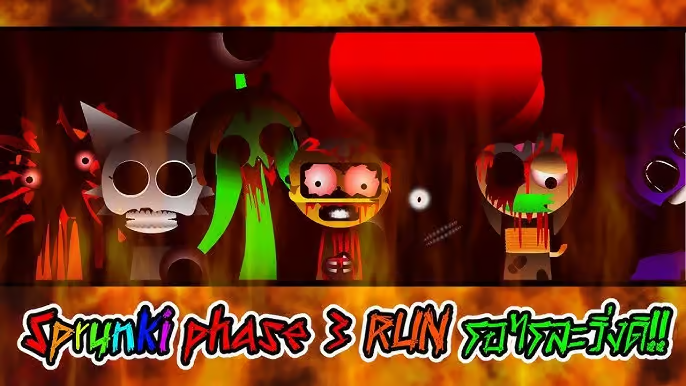
Sprunki Phase 3 is where the series shed its skin. Phases 1 and 2 worked in bright primary colors and acoustic pop loops — catchy, harmless, and safe. Phase 3 razed that foundation and rebuilt from the ground up. The sound library pivoted to dark electronic production: analog-style synth leads, industrial drum programming, and vocals run through glitch processors until they sound like transmissions from a damaged signal chain. The visual identity followed suit — rounded mascots sharpened into angular silhouettes, cheerful palettes dimmed to shadow tones, and a baseline atmosphere of unease settled into every frame. Place Oren and Simon on stage together and Nightmare Mode triggers: the screen desaturates in real time, animations corrupt frame by frame, and buried low-frequency audio layers surface beneath whatever you were already playing. Pull either character off the board and the light snaps back. This was the series' first reactive horror system — the architectural template every dark mod that followed built on top of.
Trace any dark mod in the Sprunki Phase 3 universe backward and you land here. Phase 4's full horror toggle is Nightmare Mode extracted into a standalone switch — the same dual-state mechanic, now with its own dedicated interface layer. Corruptbox took the corrupted-sound aesthetic that Phase 3 defined and scaled it to 24 characters across three unlock tables. Pyramixed Phase 3 arranged the identical dark electronic palette onto a vertical frequency grid, proving the sound design was flexible enough to survive a complete structural overhaul. Phase 3 did more than shift the series' tone — it established the grammar that Phase 4, Phase 7, Corruptbox, Hyper Shifted, and every subsequent dark installment speaks. The ~16 characters, the hidden combo discovery loop, the light-versus-dark toggle as a compositional tool — all of it started here.
Sprunki Phase 3 Key Features
?? Dark Electronic Sound Library
Every loop in Sprunki Phase 3 was authored from scratch for this phase — no carryovers, no remixes of earlier material. Synth leads carry analog warmth, industrial percussion hits with metallic weight, and vocals pass through glitch chains until they're more texture than voice. Phase 2's jangly acoustic guitars and bright pop drums are gone entirely. Bass frequencies punch lower. Melodic lines default to minor-key tension. The library doesn't just sound different — it forces different compositional instincts, because the sweet spots have all moved.
??? Nightmare Mode
Pair Oren with Simon and the entire presentation transforms — visual saturation drains, character animations stutter and fragment, and previously inaudible sub-bass textures rise from below the mix. This is not a cosmetic filter; it's a full audio-visual state change that recontextualizes every loop currently playing. Remove either character to restore standard mode. Sprunki Phase 3 treats this toggle as a compositional parameter: write verses in standard, unleash Nightmare on drops and breakdowns. Phase 4's horror mode and every reactive system that followed descend directly from this mechanic.
?? Hidden Combo System
Certain character combinations unlock content the game never advertises — bonus animations, secret audio stems, visual effects that trigger only when specific duos or trios share the stage. Sprunki Phase 3 was the first phase to build this in as a core mechanic, not a one-off easter egg. The interface gives zero hints. Discovery is the point. The community reverse-engineers and catalogs combos on Discord; dozens are documented and new ones still surface regularly. Oren + Simon = Nightmare Mode is the most famous, but it's only the entry point.
?? ~16 Characters Across Five Categories
Oren anchors the rhythm section with industrial-tinged beats and percussion. Simon supplies processed vocal loops — the series' first deliberately corrupted character design. Raddy contributes melancholic melodic leads. The full roster spans five specialized categories: beats, bass, synths, vocals, and ambient effects. Each character is tuned to occupy a distinct frequency band with intentional non-overlap — swap one synth for another and the tonal center of your entire mix shifts. Sprunki Phase 3 makes character selection a genuine compositional decision, not a cosmetic one.
?? Complete Visual Redesign
The aesthetic overhaul in Sprunki Phase 3 goes deeper than a palette swap. Character silhouettes sharpened from rounded and friendly to angular and distinct. Backgrounds darkened to near-black. UI chrome adopted subdued tones that recede rather than call attention. Animations gained a subtle edge — slight jitter, desaturation pulses, shadow movements that suggest something watching from just off-frame. For the first time in the series, the visual presentation and the audio direction reinforce each other rather than operating in tension. The look tells the same story the sound does.
?? Instant Browser Access
Open a tab and Sprunki Phase 3 is running — no launchers, no account creation, no barriers of any kind. Every character, every combo trigger, Nightmare Mode, and the full dark electronic library are available the moment the page loads. Nothing is gated. Desktop with over-ear headphones is the ideal setup: the stereo imaging, sub-bass detail, and glitch textures that define the phase's character lose significant impact through built-in laptop speakers or phone drivers.
How to Play Sprunki Phase 3
- 1
Anchor Your Mix With a Beat
Drag Oren onto the stage before anything else. In Sprunki Phase 3, the darker sound library makes a weak rhythmic foundation fatal — thin beats leave every melodic layer exposed and ungrounded. Oren's industrial percussion provides the structural spine that bass, synths, and vocals all need to sit correctly in the frequency spectrum. Start here and the rest builds itself.
- 2
Stack Low to High
Add bass before synths, synths before vocals, vocals before ambient effects. The stacking sequence in Sprunki Phase 3 is not cosmetic — adding high-frequency elements before the low end is anchored produces frequency collisions that turn the mix into a blur. Right-click any character to solo it; verify each new layer complements rather than fights what's already running before you lock it in. Build from the floor up and the clarity takes care of itself.
- 3
Activate Nightmare Mode Deliberately
Place both Oren and Simon on stage simultaneously. The shift hits instantly — palette drops to near-monochrome, character animations fragment, and deep sub-bass layers that were silent in standard mode surface underneath everything. Pull either character to revert. Use this contrast structurally: standard mode carries verses and buildups, Nightmare Mode detonates on drops, breakdowns, and climaxes. The toggle is a dynamic control, not a party trick.
- 4
Probe for Hidden Combos
Swap characters in and out in pairs — a beat with a vocal, a bass with a synth, a vocal with an effect. Some combinations trigger secret animations, bonus audio layers, and visual effects that Sprunki Phase 3 never documents. Start with the community-confirmed triggers (the Discord maintains running lists) then strike out on your own. The phase was designed to reward systematic experimentation, not guesswork. Every session can surface something undocumented.
- 5
Capture Both States
When an arrangement locks in, record it twice — once in standard mode and once with Nightmare Mode engaged. The same character set produces two recordings that read as entirely separate tracks: different energy signatures, different emotional weights, different low-end profiles. Share both versions. Some hidden combos were first identified because a listener caught an anomaly in someone else's Nightmare recording that the creator hadn't noticed while playing.
Sprunki Phase 3 Tips
Use Over-Ear Headphones
The stereo synth pads, industrial percussion transients, and sub-bass textures in Sprunki Phase 3 collapse into indistinct noise on laptop speakers and phone drivers. Closed-back over-ear headphones recover the full stereo image, the bass weight, and the glitch detail baked into the dark sound library. This is not an audiophile preference — key elements of the mix, particularly the Nightmare Mode low-frequency layers, are physically inaudible on small drivers. You are missing actual content without proper monitoring.
Make Solo Mode Your Default Check
Right-click any character to isolate it. Before adding a fourth or fifth layer, solo the new candidate against everything already running — if two melodic lines fight for the same midrange pocket, you'll hear it immediately in isolation and can swap before the full mix turns to mud. Solo mode converts Sprunki Phase 3 from a stacking toy into a mixing environment. The players who produce the cleanest arrangements use it constantly; the ones who don't wonder why their mixes sound cluttered.
Structure With the Nightmare Toggle
Map out your track sections before you start stacking: standard mode for intros and verses, Nightmare for choruses, drops, and climaxes. An entire track that stays in one mode flattens the dynamic arc that Sprunki Phase 3 is built to deliver. Treat the Oren-Simon toggle as an arrangement tool in the same category as adding or removing a character — it's a structural decision, not a special effect. The best Phase 3 tracks move between states like a song moves between sections.
Catalog Your Combo Discoveries
Keep a running note of every character pairing that produces something unexpected — an animation shift, a new audio layer, a visual glitch. Test systematically by category cross-reference rather than random placement: beat + vocal, bass + synth, vocal + effect, and so on. The Sprunki Phase 3 combo corpus on Discord grew from individual players' notes aggregated over months. Your testing session could document something the wiki doesn't have yet.
Play the Trilogy in Sequence
Open Phase 2 first and spend ten minutes with the cheerful pop and black-hat curse toggle. Then load Sprunki Phase 3 — the production jump, the tonal shift, and the mechanical ambition will register with full force. Then move to Phase 4 and watch Nightmare Mode become a standalone horror engine. Playing them back-to-back makes the lineage audible: Phase 2 asked a question, Phase 3 answered it, Phase 4 ran with the answer. Understanding that arc makes each individual phase feel deeper and more intentional.
Sprunki Phase 3 FAQ
How do I trigger Nightmare Mode?
Drag Oren and Simon onto the stage together. Colors desaturate instantly, animations corrupt, and hidden low-end audio layers emerge beneath your mix. Separate either character to revert. This is the first reactive horror system in the series — the direct predecessor to Phase 4's full horror toggle.
Why does the audio sound so different from earlier phases?
The audio engine was rebuilt from scratch. Phases 1 and 2 used acoustic pop samples — clean guitars, bright drums, unprocessed vocals. Sprunki Phase 3 replaced them with analog synths, industrial drum machines, and vocals run through glitch processors. The result is a soundscape that leans dark even before Nightmare Mode is active. Bass hits harder, melodies drift toward minor keys, and every loop carries textural layers the earlier phases never attempted.
Does it work on mobile?
Yes — touch-based drag and drop works smoothly on iOS and Android browsers. But to appreciate the stereo separation, sub-bass detail, and glitch textures that define Sprunki Phase 3's dark library, good headphones make an enormous difference. Phone speakers simply cannot reproduce what this phase is doing in the low frequencies.
Can I save or share my mixes?
Sprunki Phase 3 lets you record sessions directly in the browser. Most players capture two versions of each arrangement — one standard, one Nightmare — because they sound like completely different tracks. The community shares mixes on Discord and YouTube. Some hidden combos were discovered because someone noticed something odd in another player's recording.
How is Phase 3 different from later mods like Phase 4?
Phase 3 introduced the concept of duality — light and dark as two faces of one sound engine. Phase 4 took that concept and turned it into a standalone horror switch with its own mechanics. Think of Sprunki Phase 3 as the moment the series learned to walk in the dark. Phase 4 learned to run. Corruptbox learned to fly. But all three share DNA that started here.
Do I need to have played the earlier phases?
No. Sprunki Phase 3 works perfectly as an entry point. In fact, many players start here because the sound is more contemporary. If you're coming from Phase 2, you'll immediately notice the production leap. If it's your first Sprunki phase, everything is self-explanatory — drag characters, build layers, and discover Nightmare Mode when you're ready.
Why Players Love Sprunki Phase 3
Sprunki Phase 3 is the phase where the series grew up and found out what it actually was. The cheerful pop scaffolding of the early phases got dismantled and replaced with something darker, more ambitious, and genuinely surprising — analog-modeled synth leads, industrial percussion, vocals processed into spectral half-sounds, and a visual identity that stopped trying to be cute and started trying to be interesting. Nightmare Mode made the mixing experience dynamic for the first time: the same set of characters produces two distinct emotional registers depending on whether Oren and Simon share the stage, and the best arrangements move between those registers like a song moves through sections. Hidden combos turned passive stacking into active investigation — every session can surface something undocumented. Every horror-facing installment in the Sprunki universe, from Phase 4 through Hyper Shifted to Corruptbox and Pyramixed, carries architectural DNA that was first expressed here. Phase 3 is the Rosetta Stone for the dark half of the series.
The Sprunki Phase 3 community has stayed active for years because the phase refuses to run out of material. New character combos get documented regularly on Discord. Mix recipes that produce completely unexpected results circulate among players. Two people starting with the identical character set routinely arrive at tracks that share almost nothing in common — different stacking orders, different Nightmare toggle points, different combo discoveries mid-session, different recording decisions. The dark electronic library is deep enough to function as a genuine instrument rather than a fixed palette. This is the phase that demonstrated Sprunki wasn't a novelty — it was a production environment with a dark side worth exploring, and that exploration never bottoms out.
Comments